
Discover Angkor: Ultimate Guide to Angkor Wat, Hidden Gems & Extraordinary Experiences
Introduction
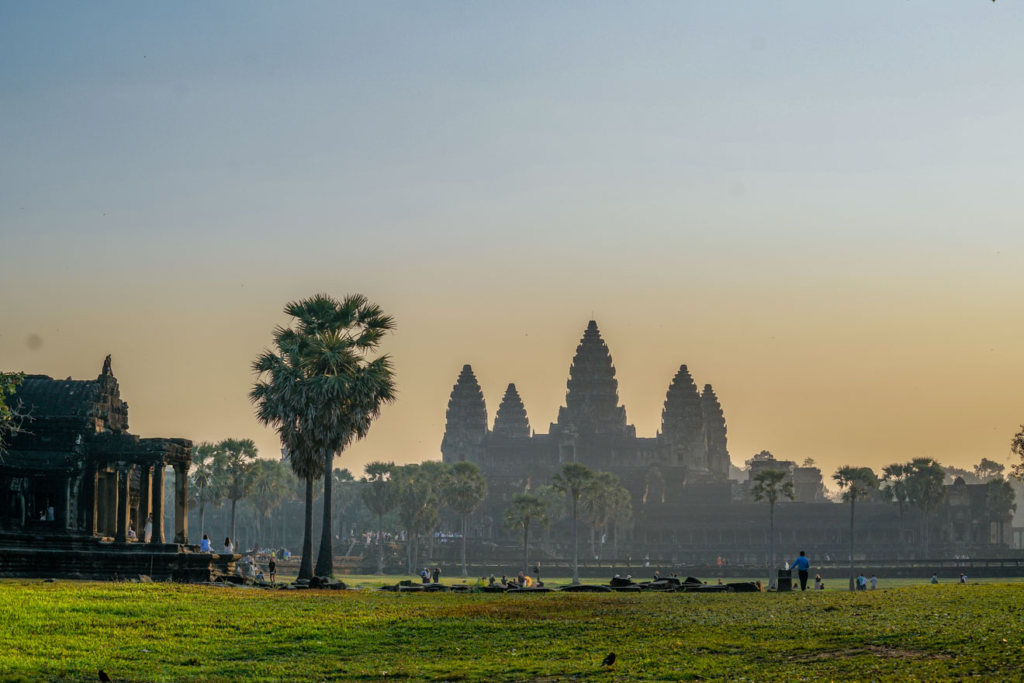
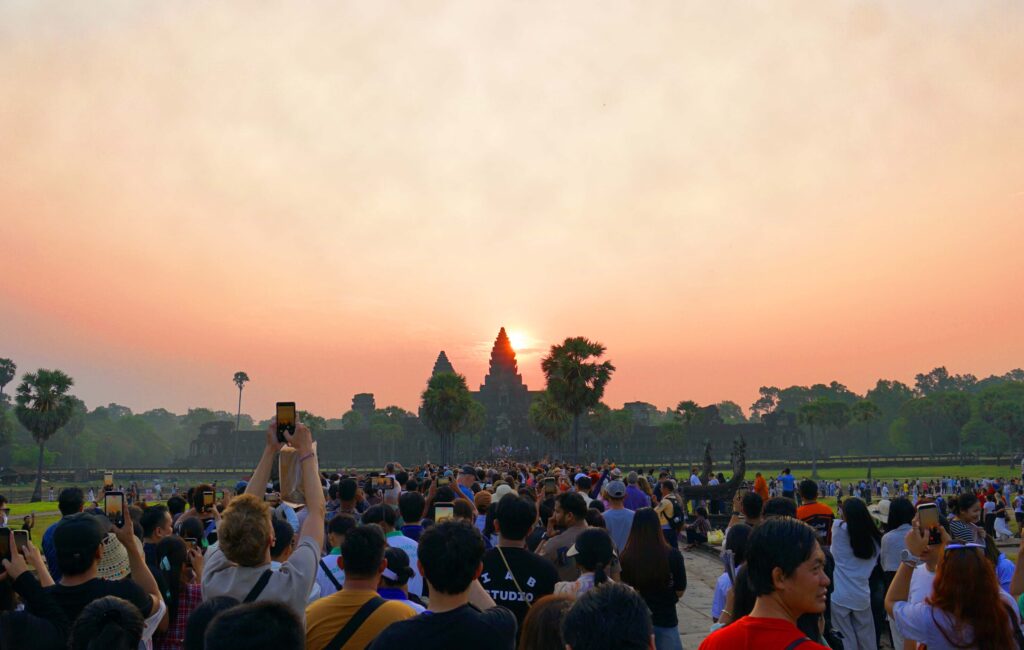
There are destinations you visit, and then there are places that stay with you forever. Angkor Wat is one of them. Rising majestically from the Cambodian jungle near Siem Reap, this iconic temple complex is the largest religious monument in the world and a breathtaking achievement of the ancient Khmer Empire. Spanning over 400 square kilometers, the Angkor Archaeological Park features hundreds of temples, reservoirs, and sophisticated structures that once formed a thriving metropolis. Today, it offers stunning contrasts — crowded at sunrise yet peacefully quiet moments later amid moss-covered ruins embraced by the jungle. More than just sightseeing, Angkor invites exploration, imagination, and a deep connection with history, leaving a lasting impression long after you leave.
Destination Overview
The Angkor Archaeological Park is one of Southeast Asia’s most important archaeological sites and a proud symbol of Cambodia’s national identity. Built over several centuries by successive Khmer kings, Angkor reflects the political, religious, and artistic evolution of an empire that once dominated much of mainland Southeast Asia.
At its height, Angkor was a megacity, possibly supporting over a million inhabitants. Its infrastructure was far ahead of its time, with vast reservoirs (barays), canals, and irrigation systems that sustained agriculture and urban life. The temples themselves were not merely places of worship—they were representations of cosmic order, designed to mirror Mount Meru, the mythical center of the universe in Hindu and Buddhist cosmology.
The most famous structure, Angkor Wat, was constructed in the early 12th century under King Suryavarman II. Unlike most Khmer temples, which face east, Angkor Wat faces west—a direction often associated with Vishnu and possibly with funerary symbolism. Over time, the temple transitioned from Hinduism to Buddhism, reflecting broader shifts in the empire’s religious practices.
Today, visitors can explore a vast landscape of temples in varying states of preservation—from the meticulously restored to the romantically ruined. Each structure tells a story, not just of kings and gods, but of time, nature, and rediscovery.
Why Visit This Destination
Angkor is not just another travel destination—it is an experience layered with meaning, beauty, and discovery.
Here’s why it stands out:
- Unmatched historical depth: Walk through centuries of Khmer Empire history in one location
- Architectural brilliance: Experience some of the most intricate and symbolic temple designs in the world
- Diverse exploration styles: Explore by bicycle, tuk-tuk, foot, or guided tour
- Photographic paradise: From golden sunrises to jungle-covered ruins
- Spiritual atmosphere: A place that feels sacred, reflective, and timeless
- Accessibility: Suitable for all types of travelers, from luxury seekers to backpackers
Angkor is one of those rare places where every traveler finds something personal—whether it’s awe, curiosity, inspiration, or peace.
Top Attractions / Must-Visit Places
Angkor Wat
At the center of it all stands Angkor Wat, a masterpiece that defines Cambodia’s identity. The temple’s grandeur is immediately apparent as you cross the long sandstone causeway over a vast moat and approach its towering central spires.
Inside, the scale becomes even more impressive. Long galleries are adorned with bas-reliefs depicting epic Hindu myths such as the Churning of the Ocean of Milk and scenes from the Ramayana. These carvings are not just decorative—they are storytelling in stone, revealing the beliefs and values of the Khmer civilization.
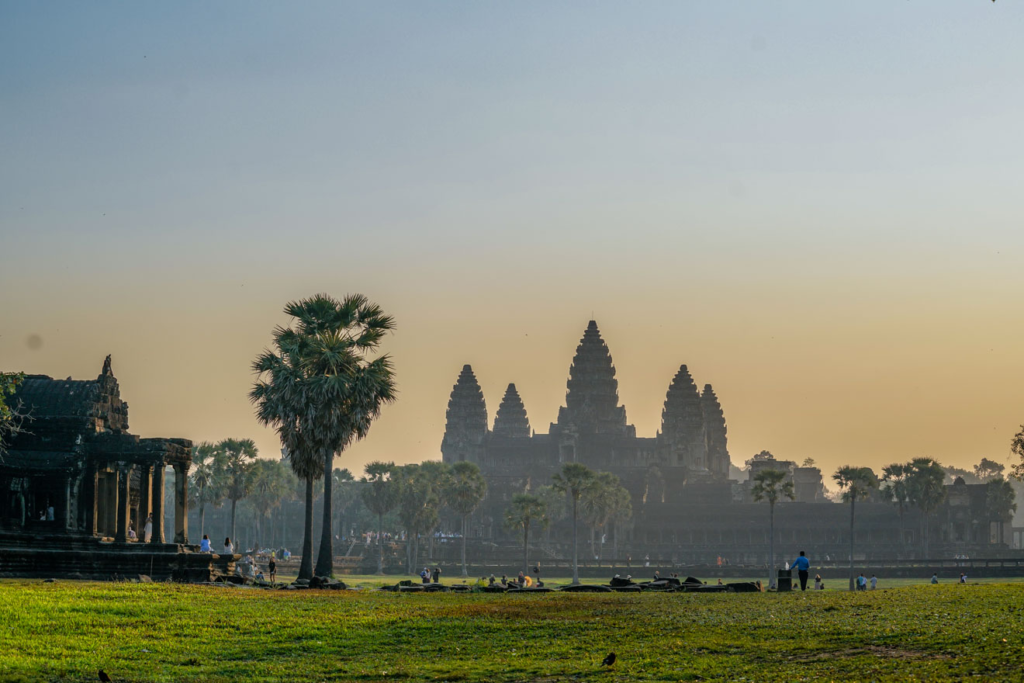
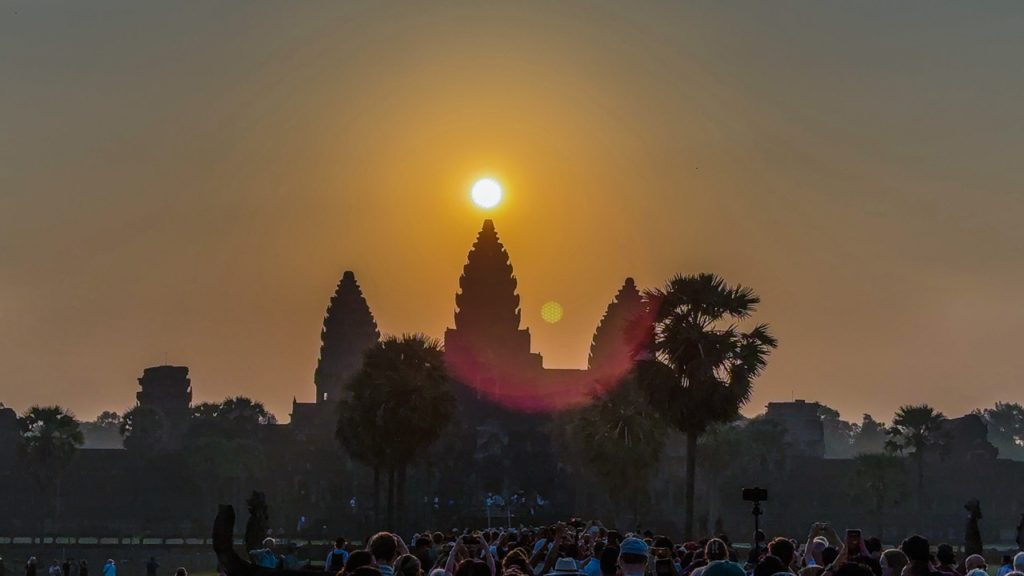
The experience of Angkor Wat changes throughout the day. At sunrise, it is serene and mystical, with the temple’s silhouette reflected in the still water. By midday, it becomes a place of intense light and shadow, highlighting the geometry of its design. In the late afternoon, warm golden tones soften the stone, creating a more contemplative mood.
Insider Tip: While sunrise is popular, consider exploring the inner galleries afterward, when most of the crowd is outside.
Bayon Temple
Located in the ancient city of Angkor Thom, Bayon Temple offers a completely different atmosphere. Instead of grand symmetry, Bayon feels mysterious and almost surreal.
Its most iconic feature is the collection of massive stone faces—over 200 in total—smiling gently from the towers. These faces seem to follow you as you walk through the temple, creating a unique sense of presence and connection.
Bayon is also rich in carvings, many of which depict everyday life during the Khmer Empire—markets, battles, ceremonies—offering a rare glimpse into the human side of history.
Best Experience: Wander without a fixed path and let the temple reveal itself slowly.
Ta Prohm
Ta Prohm is where nature takes center stage. Left largely unrestored, this temple is famous for the enormous tree roots that twist and stretch across its walls, blending architecture with jungle.
Walking through Ta Prohm feels like stepping into another world—quiet, atmospheric, and slightly mysterious. The contrast between fragile stone and powerful roots creates one of Angkor’s most memorable visuals.
Best Time: Early morning for soft light and fewer visitors.
Angkor Thom
Once the capital of the Khmer Empire, Angkor Thom is a vast walled city filled with remarkable structures. Enter through towering gates lined with statues of gods and demons, symbolizing cosmic balance.
Inside, highlights include Bayon Temple, the Terrace of the Elephants, and the Baphuon Temple. Exploring Angkor Thom gives you a sense of the scale and organization of the ancient city.
Banteay Srei
Often considered the jewel of Angkor, Banteay Srei stands out for its intricate carvings and pink sandstone construction. Smaller in size but incredibly detailed, this temple showcases some of the finest craftsmanship in the region.
Every surface seems alive with delicate patterns and mythological scenes, making it a favorite for photographers and art lovers.
Unique Experiences & Activities
Sunrise Cycling Adventure
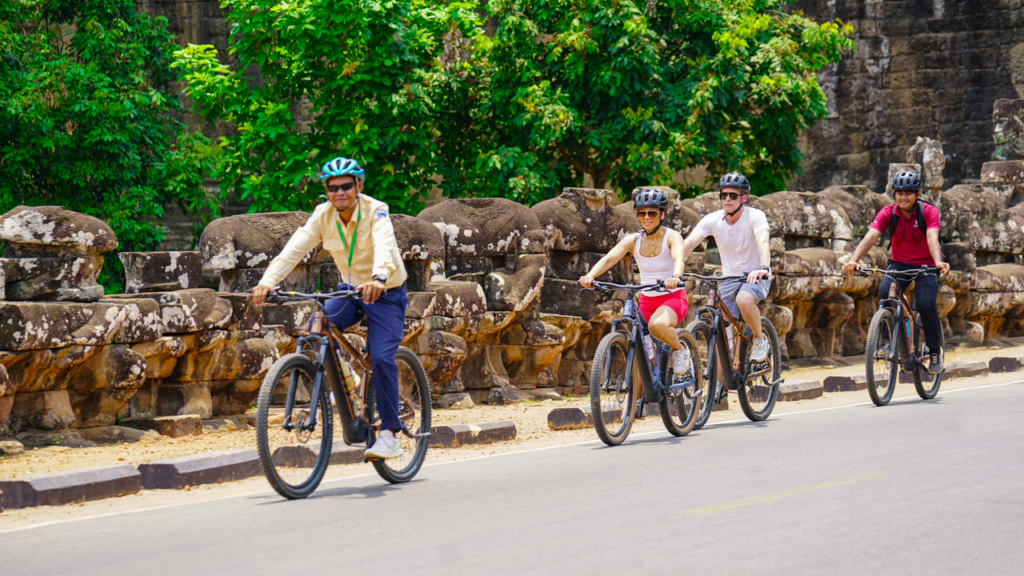
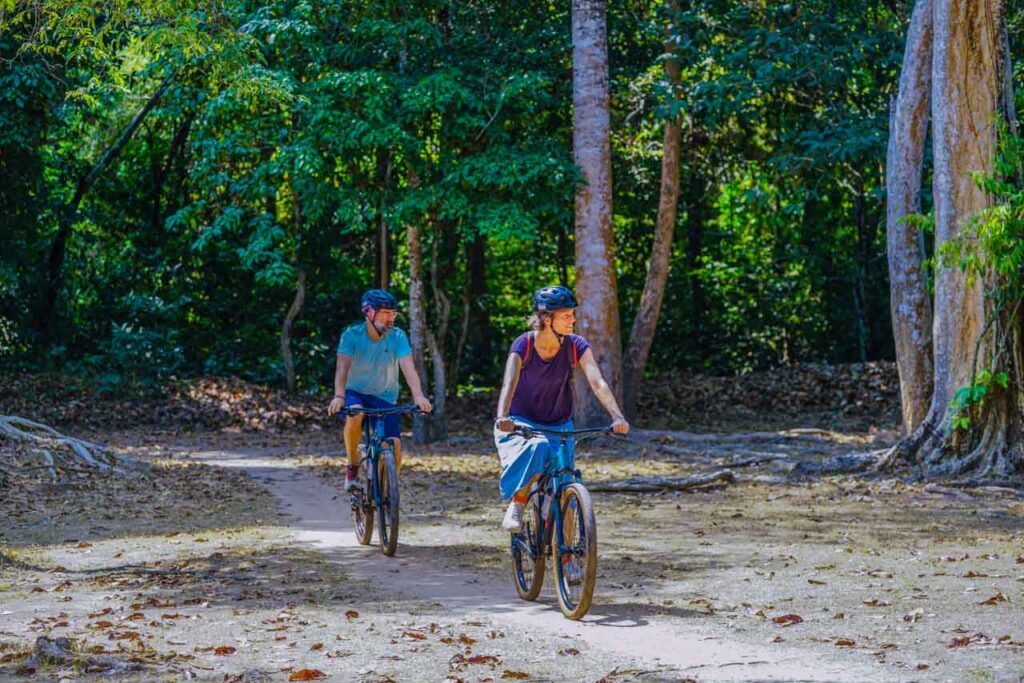
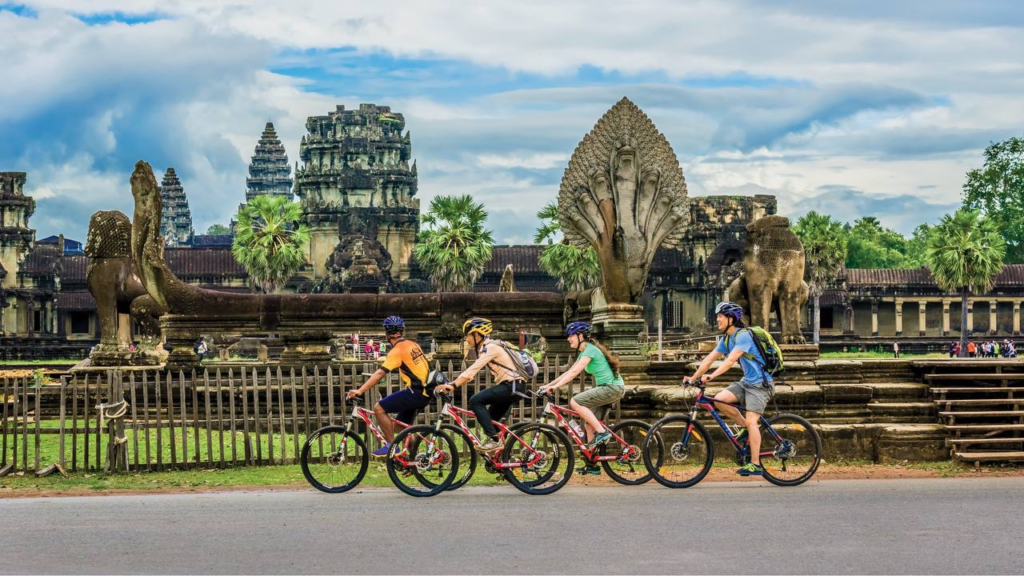
Cycling through Angkor at dawn transforms the experience completely. As the air remains cool and the roads are quiet, you move through the park at your own pace, stopping at temples as the light gradually changes.
This is not just a physical activity—it’s a sensory journey. You hear birds waking up, see mist rising from the ground, and feel the gradual warmth of the sun.
Temple-to-Temple Exploration
Instead of rushing between major sites, take time to explore smaller temples scattered across the park. These quieter locations often provide a more personal connection to the site.
Cultural Encounters in Siem Reap
The nearby town of Siem Reap offers opportunities to engage with Cambodian culture through food, markets, traditional performances, and local crafts.
Photography Journeys
Angkor offers endless compositions—from symmetrical reflections to chaotic jungle scenes. The changing light throughout the day makes each visit unique.
Hidden Gems
Preah Khan
Preah Khan is one of the most rewarding hidden gems in the entire Angkor Archaeological Park. Built in 1191 CE by King Jayavarman VII, it was originally constructed as both a Buddhist temple and a royal residence — a place of scholarship and worship that once housed over a thousand teachers and tens of thousands of attendants. Today, it stands as one of the largest temple complexes in the Angkor region, yet it remains remarkably free of the crowds that fill Angkor Wat and Ta Prohm.
What sets Preah Khan apart is its sense of raw, living history. Unlike many temples that have been carefully restored, Preah Khan has been left in a state of deliberate partial preservation. Enormous tree roots snake through crumbling galleries, moss clings to ancient sandstone walls, and collapsed doorways force you to crouch and weave through the complex. The result is an atmosphere that feels genuinely exploratory — as though you are uncovering the ruins yourself rather than following a set tourist path.
The temple’s layout is a labyrinth of long, interconnected corridors that stretch in every direction from the central sanctuary. As you move deeper inside, the light shifts dramatically — open courtyards flood with sunlight, while narrow passageways plunge into cool shadow. Intricate carvings of Buddhist and Hindu deities line the walls, many still remarkably detailed despite centuries of exposure. A distinctive two-story, round-columned structure near the eastern entrance is one of the few examples of its kind in all of Angkor and is worth seeking out.
Visiting Preah Khan in the morning means you are often the only person in entire wings of the complex. The silence, broken only by birdsong and the occasional rustle of wind through the trees, gives the experience a contemplative quality that is increasingly rare at Angkor’s more famous sites.
Neak Pean
Neak Pean is unlike anything else in the Angkor Archaeological Park. Tucked within the Jayatataka Baray — a vast artificial reservoir built in the late 12th century — this small circular island temple feels entirely removed from the rest of Angkor’s monumental energy. Where other temples demand attention through sheer scale, Neak Pean earns it through stillness.
The temple’s name means “the entwined serpents,” a reference to the two naga serpents whose bodies wrap around the base of the central island platform. In its original form, the entire structure was surrounded by four smaller square pools connected to a large central pond, each pool associated with one of the four elements — earth, water, fire, and wind. Pilgrims once bathed here, believing the waters held healing properties, channeled through stone spouts carved in the shapes of a human head, an elephant, a lion, and a horse. The symbolism runs deep: Neak Pean was designed as a physical representation of Lake Anavatapta, a mythical Himalayan lake believed in Buddhist cosmology to be the source of the world’s four great rivers.
Today, a long wooden boardwalk carries visitors across the water to the island, and the walk itself is part of the experience. In the wet season, the reservoir fills, and the surrounding landscape turns lush and green, with the temple appearing to float on the surface. In the dry season, the shallow basin recedes, revealing a wide, open clearing that feels almost lunar in its quiet. At either end of the year, the light here is soft and reflective — particularly in the early morning, when mist hovers low over the water and the air carries none of the heat that builds later in the day.
Because Neak Pean sits slightly off the main temple circuit, visitor numbers stay low even on busy days. It is the kind of place you arrive at and immediately slow down — somewhere to sit with the view, absorb the history quietly, and feel the rare luxury of space in one of the world’s most visited archaeological sites.
Ta Nei
If Angkor has a secret, Ta Nei might be it. Sitting just north of Ta Keo and a short distance from the main temple circuit, this small Buddhist temple from the late 12th century is one of the least visited in the entire park — not because it lacks character, but simply because most visitors never think to look for it. That invisibility is precisely what makes it special.
Ta Nei was built during the reign of King Jayavarman VII, the same prolific ruler responsible for Bayon, Preah Khan, and Neak Pean. Yet where those temples have drawn the attention of restoration teams and tourist infrastructure, Ta Nei has been left largely to its own quiet existence. The jungle has moved in with confidence — roots curl through doorframes, moss blankets entire wall sections, and the occasional collapsed lintel forces you to choose your path carefully. There are no vendors at the entrance, no tour group narration echoing through the corridors, and no rope barriers guiding you from one highlight to the next. You are free to wander entirely on your own terms.
The temple itself is modest in scale — a single central sanctuary surrounded by libraries, gopuras, and connecting galleries — but what it lacks in grandeur it more than compensates for in atmosphere. Light filters through the jungle canopy in long, shifting beams, landing on worn stone carvings of apsaras and floral motifs that remain surprisingly intact. The air smells of damp earth and old stone. Birds move through the treetops overhead. It is the kind of place where you find yourself instinctively lowering your voice, not out of obligation, but out of genuine respect for the quiet.
For travelers who have spent a morning at Angkor Wat shoulder-to-shoulder with crowds, Ta Nei can feel almost disorienting in the best possible way. It is a reminder that Angkor is not just a collection of famous monuments — it is a vast landscape full of spaces that reward curiosity, patience, and a willingness to step just slightly off the beaten path.
Suggested Itineraries
Half-Day
- Sunrise at Angkor Wat
- Explore Ta Prohm
- Return before peak heat
Full-Day
- Sunrise at Angkor Wat
- Visit Angkor Thom and Bayon
- Afternoon at Ta Prohm
2-Day Plan
Day 1: Main highlights
Day 2: Banteay Srei and hidden gems
Best Time to Visit
Angkor can be visited year-round, but the experience changes considerably depending on when you go. Cambodia has two distinct seasons — dry and wet — with a transitional hot period sitting between them. Each brings its own trade-offs between weather, crowds, landscape, and cost. Understanding what each season actually feels like on the ground will help you choose the visit that suits you best.
- Cool Season (Nov–Feb):
- This is the most popular time to visit Angkor Wat and the wider Angkor Archaeological Park. Temperatures are comfortable (20–28°C), humidity is lower, and skies are mostly clear—perfect for long temple days, sunrise visits, and photography.
- The downside is crowds and higher prices, especially in December and January when sunrise spots fill quickly. Booking accommodation in Siem Reap well in advance is essential. For a better balance, aim for November or early February.
- Hot Season (Mar–May):
- This is the hottest period, with temperatures often exceeding 35°C. Midday temple visits can be exhausting, so planning around the heat is crucial.
- The advantage is fewer tourists and lower hotel rates. The best strategy is to explore early in the morning and late afternoon, with a break during peak heat hours. Mid-April brings the Khmer New Year, adding a vibrant cultural atmosphere in Siem Reap.
- Green Season (Jun–Oct):
- The rainy season transforms Angkor into a lush, vibrant landscape. Afternoon showers are common but usually short, followed by cooler, fresher air. Moats and reservoirs fill up, creating beautiful reflections and dramatic scenery.
- Tourist numbers drop significantly, offering a more peaceful and immersive experience. September and October are the wettest months, while June and July are milder.
How to Get There
Getting to Angkor Archaeological Park is straightforward, with Siem Reap serving as the main gateway for all travelers.
By Air
The easiest way to arrive is by flying into Siem Reap–Angkor International Airport, which serves major cities across Southeast Asia, including Bangkok, Singapore, and Ho Chi Minh City. From the airport, it takes around 45–60 minutes to reach Siem Reap town by taxi or private transfer.
From Siem Reap to Angkor
The temples, including Angkor Wat, are located approximately 6–7 km from the town center, making access quick and convenient.
You have several transport options depending on your travel style:
- Tuk-tuk: The most popular and flexible option. Ideal for relaxed exploration with a local driver who often doubles as a guide.
- Bicycle: A great choice for active travelers who want a more immersive and eco-friendly experience. Roads are generally flat and suitable for cycling.
- Private car or van: Best for comfort, especially during the hot season or for families and groups.
- Motorbike (with driver): Offers speed and flexibility, though tourists typically cannot self-drive inside the park.
Travel Tips
- Start early (especially for sunrise visits) to avoid traffic and crowds
- Agree on pricing with drivers in advance
- Consider multi-day transport arrangements for better value
With its proximity and variety of transport options, reaching Angkor is easy, allowing you to focus on exploring one of the world’s greatest historical landscapes.
Practical Travel Tips
- Dress modestly: When visiting sacred sites like Angkor Wat, it’s important to wear clothing that covers your shoulders and knees. Lightweight, breathable fabrics are ideal in Cambodia’s climate, helping you stay comfortable while respecting local customs and religious traditions.
- Stay hydrated: The heat and humidity—especially within the vast Angkor Archaeological Park—can be intense. Carry a reusable water bottle and drink regularly throughout the day. Electrolyte drinks can also help if you’re exploring for long hours or cycling between temples.
- Start early to avoid the heat: Begin your day before sunrise to enjoy cooler temperatures and fewer crowds. Early mornings not only make temple exploration more comfortable but also offer the best lighting for photography, especially around Angkor Wat.
- Respect temple rules: Angkor is an active spiritual site, not just a tourist attraction. Avoid climbing restricted structures, do not touch delicate carvings, and keep noise levels low. Always follow posted guidelines and be mindful of monks and worshippers to ensure a respectful and meaningful visit for everyone.
Who This Destination Is For
The experience of visiting Angkor Wat and the wider Angkor Archaeological Park appeals to a remarkably diverse range of travelers, each finding something unique within its vast and layered landscape:
- History lovers: Angkor is a living museum of the Khmer Empire. From ancient bas-reliefs to grand temple cities, every structure tells a story of power, religion, and civilization. Ideal for those who enjoy exploring the past in depth.
- Adventure seekers: Beyond the main temples, the park offers opportunities for cycling, off-the-beaten-path exploration, and the discovery of jungle temples. It’s perfect for travelers who enjoy active and immersive experiences.
- Photographers: With dramatic sunrises, intricate carvings, and nature reclaiming ancient ruins, Angkor is a dream destination for photography. Light, texture, and atmosphere change constantly, offering endless creative possibilities.
- Couples: The combination of serene landscapes, golden sunsets, and unique shared experiences—like sunrise at Angkor Wat—makes it a romantic destination with a strong sense of wonder.
- Solo travelers: Angkor is safe, accessible, and easy to navigate. Solo visitors can explore at their own pace while still connecting with guides, locals, or fellow travelers along the way.
- Cultural explorers: Those interested in local traditions, spirituality, and the Cambodian lifestyle will find meaningful experiences both inside the temples and in nearby Siem Reap.
- First-time visitors to Southeast Asia: Angkor provides an unforgettable introduction to the region, combining accessibility with world-class heritage and a wide range of travel styles.
No matter your travel style, Angkor offers depth, flexibility, and a sense of discovery that few destinations in the world can match.
Sustainability & Responsible Travel
Visiting Angkor Wat and the wider Angkor Archaeological Park comes with a shared responsibility to help preserve this extraordinary cultural landscape for future generations.
- Respect heritage sites: Angkor’s temples are fragile and deeply significant. Avoid touching carvings, climbing on restricted structures, or stepping into protected areas. Even small actions can cause long-term damage to these ancient stones.
- Support local communities: Choose local guides, family-run businesses, and locally owned restaurants in Siem Reap. This helps ensure that tourism directly benefits the people who live and work around Angkor, creating a more sustainable local economy.
- Minimize environmental impact: Reduce plastic use by carrying a reusable water bottle, avoiding littering, and disposing of waste responsibly. Stick to marked paths to protect both the ruins and the surrounding natural environment.
- Be culturally mindful: Dress appropriately, behave respectfully in sacred areas, and take time to understand local customs and traditions. A respectful attitude enhances your experience while honoring the site’s cultural significance.
- Travel thoughtfully: Consider slower, more immersive ways of exploring—such as cycling or walking—rather than rushing between major highlights. This not only reduces your environmental footprint but also allows for a deeper connection with the destination.
Responsible travel at Angkor is about more than following rules—it’s about preserving a living heritage while creating meaningful and respectful experiences.
FAQ
How long should I stay?
Ideally, plan for at least 2–3 days to explore Angkor Archaeological Park at a comfortable pace. One day is enough to see major highlights like Angkor Wat, but it will feel rushed. With two or three days, you can explore deeper, visit lesser-known temples, and enjoy the experience without fatigue.
Is it suitable for cycling?
Yes, cycling is one of the best ways to explore Angkor. The terrain is mostly flat, and the roads are relatively easy to navigate. It allows you to move at your own pace, discover quieter paths, and enjoy the surroundings more intimately compared to motorized transport.
What is the best time of day to visit the temples?
Early morning (sunrise) and late afternoon are the best times. Temperatures are cooler, lighting is softer for photography, and the atmosphere is more peaceful. Midday can be very hot, especially during the dry season.
Do I need a guide to visit Angkor?
A guide is not required, but it can greatly enhance your experience. Local guides provide historical context and cultural insights, and can help you navigate the vast temple complex efficiently.
Are temple passes required?
Yes, all visitors must purchase an Angkor Pass to enter the park. Passes are available for 1-day, 3-day, or 7-day visits, depending on how long you plan to explore.
What should I wear when visiting Angkor?
Wear lightweight, breathable clothing that covers your shoulders and knees, as the temples are sacred sites. Comfortable walking shoes are also essential due to uneven surfaces and extensive walking.
Is Angkor family-friendly?
Yes, Angkor can be enjoyed by families, though younger children may find long temple visits tiring. Planning shorter visits and including breaks can make the experience enjoyable for all ages.
Is Angkor Wat Hindu or Buddhist?
Angkor Wat was originally built as a Hindu temple dedicated to Vishnu in the early 12th century. Over time it transitioned to Buddhism, reflecting broader religious shifts in the Khmer Empire. Today it functions as an active Buddhist temple and pilgrimage site.
What is the best month to visit Angkor Wat?
November and February are the sweet spot — cool, dry weather with manageable crowds. December and January offer the best conditions but draw the largest tourist numbers of the year.
Conclusion + Call to Action
Visiting Angkor Wat and the Angkor Archaeological Park is not just about seeing temples—it’s about experiencing a civilization, a culture, and a landscape that continues to inspire the world.
From sunrise reflections to hidden jungle ruins, every moment offers something unique. The more time you spend here, the more layers you uncover.
If you’re ready for a journey that blends history, adventure, and meaning, Angkor is waiting. Plan your visit, take your time, and let the experience unfold.
If you’re looking for a solid online casino, playpix.com casino is a good bet. Good selection of games, and I’ve had some decent payouts too. Plus, the site is legit. Ready to win? Check it here: playpix.com casino
Just gettin’ into Play Pix and so far, I’m impressed. Easy to use, fun games, and seems like a safe place to play. Thumbs up from me! Start playing: play pix
Downloaded the playpix app and it’s fire! Works great on my phone and I can play anywhere. Super convenient. No lag, no issues. Must have app! Get the app right here: playpix app
Looking for a legit international gaming portal? Download Gamvip com through G88 – it’s the real deal. Everything you need at g88 download gamvip com cổng game quốc tế.
Heard good things about 166winapp. Seems like a solid app for gaming. Gonna give it a shot. Check out the 166winapp.
Yo, 49jillio is legit! Been trying my luck here and the experience is smooth. Great interface and decent payouts. Definitely worth checking out 49jillio.
Grab the Nesine apk for easy access on your phone. Works flawlessly and keeps you connected. Highly recommend downloading it. nesine apk indir
Alright, general Nesine search! Ready to get in on the betting action? Good luck, and may your bets be winners! Start here: nesine.
Just got the latest Okbet update and it’s even better! New features make betting even more fun. Keep up the good work! Check updatesokbet update.
Okay, vua săn cá đổi thưởng on VuaSanCaVN? Now we’re talking! Gotta love the chance to win something while having fun. This is where I’m spending my evening. Try your luck here: vua săn cá đổi thưởng
Hey everyone, just popped onto xo so 666 via xoso66apps.com, figured I’d give it a try, not bad, not bad. Quick and simple to use, might get lucky. Give it a shot here: xo so 666
Anyone got a ‘code b29’ I can snag? Always on the hunt for extra goodies! This site seems to keep them updated though!code b29
Great experience so far. I love how easy it is to navigate through the different betting markets. Everything is very intuitive for a regular player. cljugabetchile
The login process is lightning fast and the site stability is impressive. I never deal with lag or crashes even during peak hours. Top notch service! m4kinglogin
Feeling secure is the most important thing for me and this site delivers exactly that. The security measures are clear and I feel safe depositing my funds. pebetsafe